Buying a home excites most people, yet mortgage rates often confuse them. These rates decide your monthly payment and total interest over decades. This guide explains everything simply, shares real insights, and helps you secure the best deal.

What Exactly Is a Mortgage Rate?
A mortgage rate is the interest percentage you pay on your home loan. Lenders charge it for borrowing money. You find two main types: fixed-rate and adjustable-rate (ARM).
Fixed-rate mortgages lock your rate for the entire term—usually 15 or 30 years. Your principal and interest payment stays the same, making budgeting easy.
Adjustable-rate mortgages start with a lower rate for an initial period (often 5–7 years), then adjust based on market conditions. They suit buyers who plan to sell or refinance before adjustments kick in.
| Mortgage Type | Advantages | Disadvantages |
|---|---|---|
| 30-Year Fixed | Predictable payments, lower monthly cost | Higher total interest over time |
| 15-Year Fixed | Lower rate, pay off faster, save on interest | Higher monthly payments |
| Adjustable-Rate (ARM) | Lower starting rate, good for short-term ownership | Payments can rise significantly later |
Key Factors That Shape Your Mortgage Rate
Rates vary daily and differ by borrower. The Consumer Financial Protection Bureau outlines seven key factors that determine your mortgage interest rate:
- Credit score — Higher scores unlock better rates.
- Home location — Rates differ by state and local market.
- Home price and loan amount — Larger loans may carry slightly higher rates.
- Down payment — Bigger down payments often mean lower rates.
- Loan term — Shorter terms usually offer lower rates.
- Interest rate type — Fixed or adjustable.
- Loan type — Conventional, FHA, VA.
Broader economic forces also matter. The Federal Reserve sets short-term rates that influence longer-term mortgage rates. Inflation, bond markets, and investor demand drive daily changes.

Current Mortgage Rates in January 2026
Rates fluctuate, but as of early January 2026, the average 30-year fixed-rate mortgage sits around 6.15%, according to the latest Freddie Mac Primary Mortgage Market Survey.
This marks a drop from peaks above 7% in recent years but remains higher than the historic lows under 3% seen in 2021. Even small differences add up. On a $400,000 loan:
- At 6.15%, monthly principal and interest ≈ $2,440
- At 5.65%, monthly principal and interest ≈ $2,310
That 0.5% saves roughly $47,000 in interest over 30 years.
The Mortgage Application Process: Step-by-Step
Understanding the mortgage application process reduces stress. Here’s the typical flow:
- Get pre-approved — Share basic financial info for a conditional approval letter that strengthens offers.
- Find a home and make an offer — Your pre-approval helps here.
- Submit full mortgage application — Provide detailed documents right after offer acceptance.
- Processing and underwriting — The lender verifies everything and assesses risk.
- Appraisal and inspections — The home gets professionally valued.
- Final approval and closing — Sign documents and get keys.
The Consumer Financial Protection Bureau offers a clear overview of what you need to do to apply for a mortgage loan. The Federal Housing Finance Agency also provides a helpful Step-by-Step Mortgage Guide from Application to Closing.
Effective Communication with Your Loan Officer
Your loan officer guides you through the mortgage application. Strong communication speeds things up and avoids surprises.
- Ask questions early and often.
- Respond quickly to document requests.
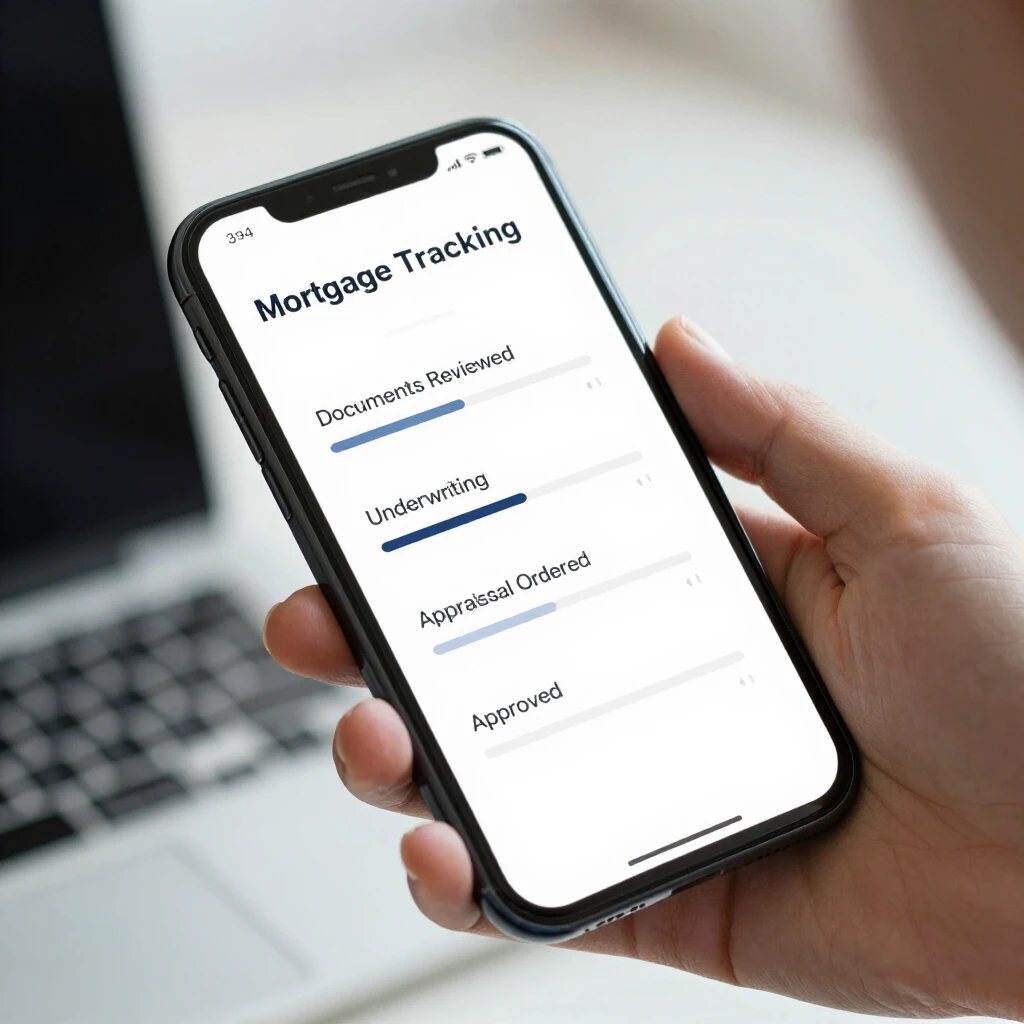
- Use mortgage application status tracking portals—most lenders offer online dashboards.
- Inform them immediately about job or financial changes.
I’ve seen applications delayed for weeks over simple missing documents. Quick, clear communication often separates smooth closings from stressful ones.
Tips to Secure the Best Possible Rate
- Boost your credit score—pay bills on time and reduce debt.
- Shop multiple lenders—rates vary by half a percent or more.
- Consider buying discount points to lower your rate.
- Lock your rate once you’re comfortable with it.
- Make a larger down payment if possible.
Small improvements in these areas often yield meaningful savings.
Final Thoughts
Mortgage rates impact your home-buying power more than almost anything else. Understand the factors, stay informed on current trends, and communicate clearly throughout the mortgage application process. You’ll position yourself for the best outcome.
Rates remain dynamic, so check reliable sources regularly and work with a trusted loan officer. With preparation, you can turn the complex process into a manageable step toward homeownership.


