Congratulations on your new home! Moving in marks the start of an exciting chapter. These moving tips for new homeowners will help you stay organized, save money, and reduce stress so you can focus on enjoying your new space.

Start Planning Early
Give yourself at least 8 weeks to prepare. Starting early prevents last-minute chaos and lets you make thoughtful decisions.
Create a simple moving checklist with dates for each task. Many new homeowners underestimate how much time small jobs take, like transferring utilities or updating your address.
Declutter Before You Pack
Moving is the perfect chance to let go of things you no longer need. Go room by room and ask: Have I used this in the past year?
- Sell items online or at a garage sale
- Donate gently used goods to charity
- Recycle or dispose of broken items responsibly
You’ll pack fewer boxes, pay less for moving services, and start fresh in your new home.
Budget Wisely for Your Move
New homeowners often face unexpected costs. Create a realistic moving budget that covers everything from packing supplies to professional help.
Typical expenses include: - Truck rental or moving company ($500–$3,000 depending on distance) - Packing materials ($200–$500) - Utility setup fees - Cleaning services - Takeout food during the busy days
If you recently closed with an FHA mortgage, remember that FHA mortgage insurance affects your monthly budget. Most FHA loans require an upfront mortgage insurance premium of 1.75% (often financed into the loan) and an annual premium between 0.40% and 0.55% of the loan amount, added to your monthly payment.
For accurate details, visit the official HUD website: FHA Mortgage Insurance Requirements.
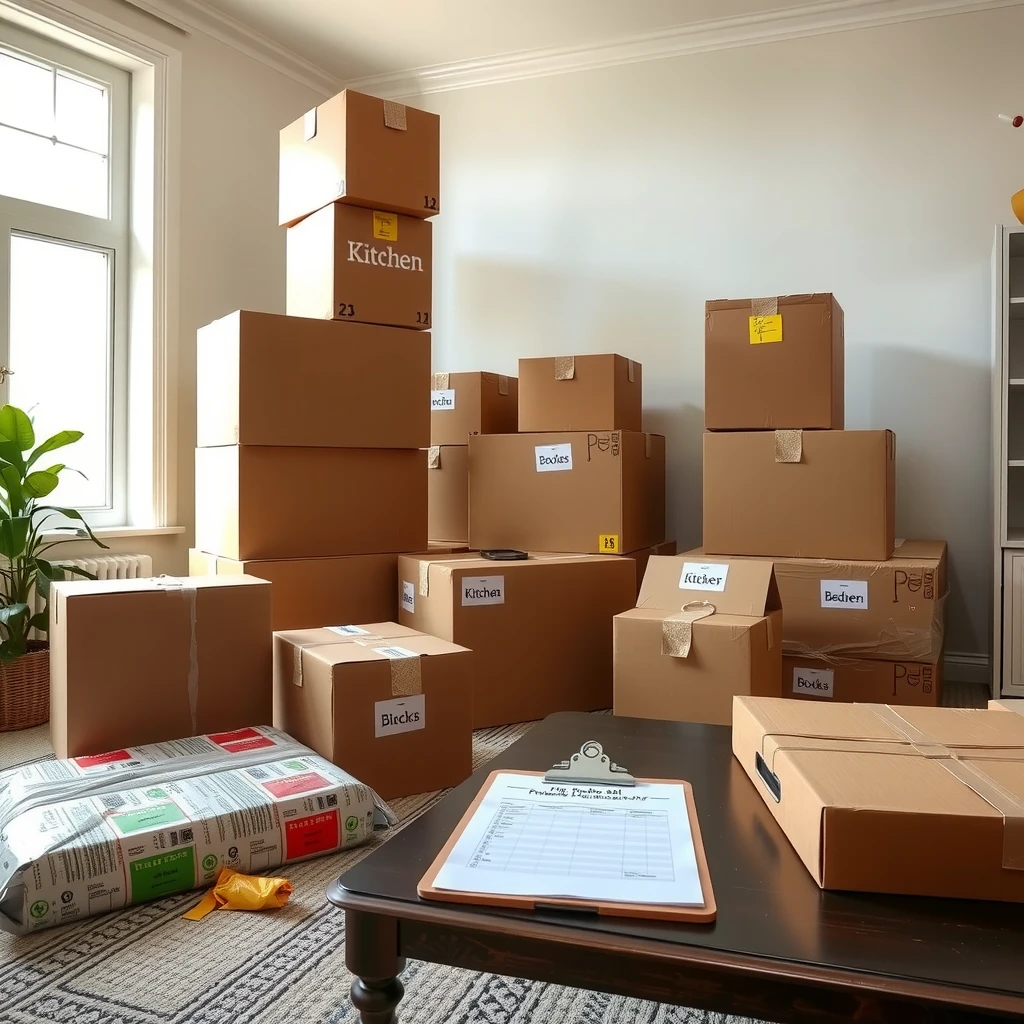
Pack Smart and Stay Organized
Good packing saves time on both ends of the move.
Essential Packing Tips
- Use sturdy boxes in similar sizes for easy stacking
- Wrap fragile items in clothing or towels to save on bubble wrap
- Label every box on multiple sides with room and contents
- Color-code boxes by room (blue for kitchen, green for bedroom)
- Pack an “open first” box with toiletries, phone chargers, basic tools, snacks, and a change of clothes
- Take photos of electronic setups before disconnecting cables
Pro tip: Pack books and heavy items in small boxes to keep weight manageable.
| Room | Packing Priority | Special Tips |
|---|---|---|
| Kitchen | High | Wrap glasses individually; pack plates vertically like records |
| Bedroom | Medium | Keep clothes on hangers and cover with trash bags for quick transfer |
| Bathroom | Low | Seal liquids in plastic bags to prevent leaks |
| Garage/Storage | Last | Dispose of hazardous materials movers won’t transport |
Choose the Right Moving Help
Decide early whether to DIY or hire professionals.
Full-service movers handle packing, loading, transport, and unloading—but cost more. Hybrid options let you pack yourself and hire help only for heavy lifting.
Get at least three written quotes. Check reviews on trusted sites and confirm licensing and insurance.
If hiring movers, book 4–6 weeks in advance, especially during peak summer months.
Moving Day Survival Guide
Prepare for a long, physical day.
- Confirm arrival time with movers the day before
- Keep valuables and important documents with you
- Do a final sweep of the old home (closets, cabinets, garage)
- Take meter readings for utilities
- Leave a note with your new address for the next occupants
Stay hydrated and have easy snacks on hand. Keep children and pets with a trusted friend or in a quiet room if possible.

Settle Into Your New Home Quickly
Once the truck leaves, focus on making your house feel like home.
First 48 Hours Checklist
- Change the locks (or rekey) for security
- Deep clean before fully unpacking, especially kitchen and bathrooms
- Test smoke and carbon monoxide detectors
- Locate the main water shut-off and circuit breaker
- Set up beds first so you have a comfortable place to rest
- Unpack the kitchen next—cooking at home saves money after days of takeout
Introduce yourself to neighbors. A simple wave or quick chat builds community from day one.
Long-Term New Homeowner Tips
Protect your investment from the start.
- Schedule routine maintenance (HVAC filter changes, gutter cleaning)
- Create an emergency fund for unexpected repairs
- Review your homeowners insurance policy annually
- Keep a home maintenance folder with warranties and manuals
If you used an FHA mortgage, note that you may be able to cancel annual mortgage insurance once you reach 20% equity—track your loan balance and home value.
Final Thoughts
Moving into your new home is more than changing addresses—it’s the beginning of new memories. With good planning and these moving tips for new homeowners, you’ll handle the challenges and start enjoying homeownership sooner.
Take it one box at a time. You’ve got this!


