Overview
FHA mortgage insurance protects lenders if you default on your loan, allowing you to buy a home with a low down payment. This guide explains the two types of premiums, current rates, and how long you pay them. Understanding FHA mortgage insurance helps you plan better for homeownership.

What Is FHA Mortgage Insurance?
An FHA mortgage is a home loan backed by the Federal Housing Administration (FHA), part of the U.S. Department of Housing and Urban Development (HUD). It helps people with lower credit scores or smaller down payments become homeowners.
The key feature? Mortgage insurance. You pay premiums to protect the lender if you can't repay the loan. In return, lenders offer better terms, like just 3.5% down.
Without this insurance, many first-time buyers would struggle to qualify for a loan.
Types of FHA Mortgage Insurance Premiums
FHA loans require two main types of insurance:
-
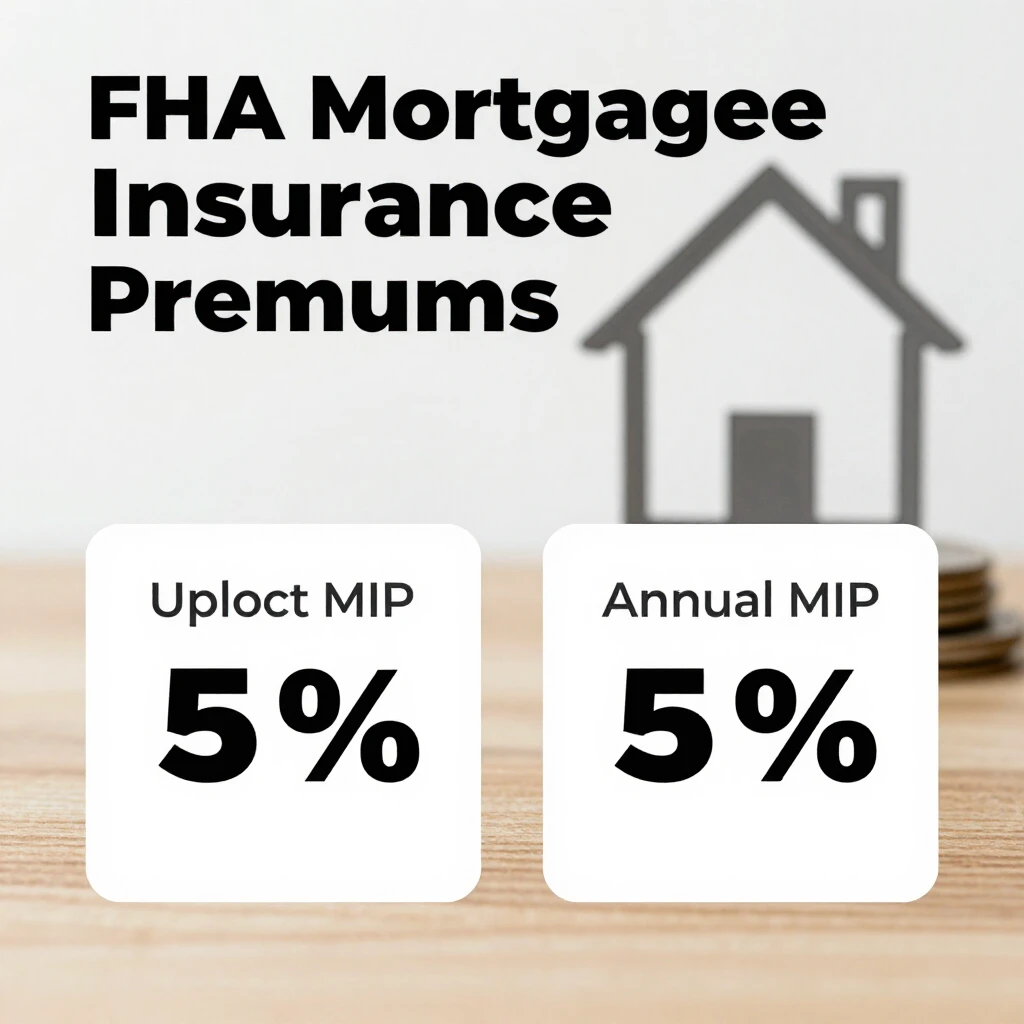
Upfront Mortgage Insurance Premium (UFMIP): Paid at closing, usually 1.75% of the loan amount. You can finance it into the loan.
-
Annual Mortgage Insurance Premium (Annual MIP): Paid monthly, divided into 12 payments added to your mortgage.
According to HUD's official Mortgagee Letter 2023-05, the upfront rate remains 1.75% for most loans.
Current Annual MIP Rates
In 2023, FHA reduced annual MIP rates by 30 basis points for most borrowers. This change saves the average borrower about $800 per year.
For 30-year loans (most common):
| Loan Amount | Down Payment | Annual MIP Rate |
|---|---|---|
| ≤ $726,200 | > 10% | 0.50% |
| ≤ $726,200 | ≤ 10% | 0.55% |
| > $726,200 | > 10% | 0.70% |
| > $726,200 | ≤ 10% | 0.75% |
These rates apply to cases endorsed after March 20, 2023, per HUD guidelines.
How Long Do You Pay FHA Mortgage Insurance?
This depends on your down payment and when you got the loan.
-
If you put down less than 10%: You pay annual MIP for the entire loan term (often 30 years).
-
If you put down 10% or more: You pay for 11 years.
For loans after June 2013, you can't cancel based only on reaching 22% equity like older loans. The only ways to remove it are refinancing to a conventional loan or paying off the FHA mortgage.
Many borrowers refinance once they build enough equity to avoid private mortgage insurance (PMI) on a new loan.
Real-Life Example: Costs in Action
Let's say you buy a $300,000 home with 3.5% down ($10,500). Your loan amount: $289,500 (plus financed UFMIP).
-
Upfront MIP: 1.75% ≈ $5,066 (financed).
-
Annual MIP: 0.55% ≈ $132 per month.
Total monthly addition: About $132 for insurance, on top of principal, interest, taxes, and homeowners insurance.
Over 30 years without refinancing, that's tens of thousands in premiums. But it gets you into a home sooner.
Pros and Cons of FHA Mortgage Insurance
Pros: - Low down payment requirement. - More forgiving credit standards. - Premiums don't depend on your credit score (unlike conventional PMI).
Cons: - Lifetime MIP if down payment <10%. - Adds to monthly payment. - Harder to cancel than conventional PMI.
In my experience helping buyers, the pros often outweigh the cons for first-timers. The insurance makes homeownership possible when it otherwise wouldn't be.
Tips for Managing FHA Mortgage Insurance
-
Put down as much as you can – aim for 10% to limit MIP to 11 years.
-
Improve your credit before applying to get the best interest rate, offsetting some premium costs.
-
Plan to refinance later. Once you hit 20% equity, switch to conventional and drop insurance.
-
Shop lenders – some offer credits to cover upfront costs.
Starting your FHA loan application? Look for an online FHA loan application guide to compare approved lenders.

Is an FHA Loan Right for You?
FHA mortgages shine for first-time buyers, those with past credit issues, or anyone needing a small down payment. The insurance cost is the trade-off for easier access.
As home prices stay high, these loans remain a strong path to ownership. Talk to a lender early to run numbers specific to your situation.
Final Thoughts
Understanding FHA mortgage insurance empowers you during the home-buying process. It adds cost but opens doors for millions. With the 2023 rate reduction, it's more affordable than in recent years. Weigh the premiums against the benefits, and consider your long-term plans.
Ready to explore? Start your FHA loan application today and take the first step toward your new home.


