Overview
Choosing between an FHA and a conventional mortgage can feel overwhelming, but it comes down to your financial situation. FHA loans offer easier qualification with lower down payments, while conventional loans often save money long-term for those with stronger credit. This guide breaks it all down to help you decide.

When buyers ask me about Comparing Mortgage Types: FHA vs. Conventional - https://example.com/loan-comparison, I always start with their goals. Many first-time buyers love FHA mortgages for their flexibility.
What Is an FHA Mortgage?
An FHA mortgage is backed by the Federal Housing Administration. This government support lets lenders offer better terms to borrowers who might not qualify for other loans.
You can put down as little as 3.5% if your credit score is 580 or higher. With scores between 500 and 579, it's 10% down.
FHA loans work well for primary homes only. They come with mortgage insurance to protect the lender.
What Is a Conventional Mortgage?
Conventional loans come from private lenders and follow guidelines from Fannie Mae or Freddie Mac. They are not government-backed.
Many allow just 3% down, especially for first-time buyers. But most people aim for 20% to avoid extra insurance.
These loans fit primary homes, second homes, or investment properties.
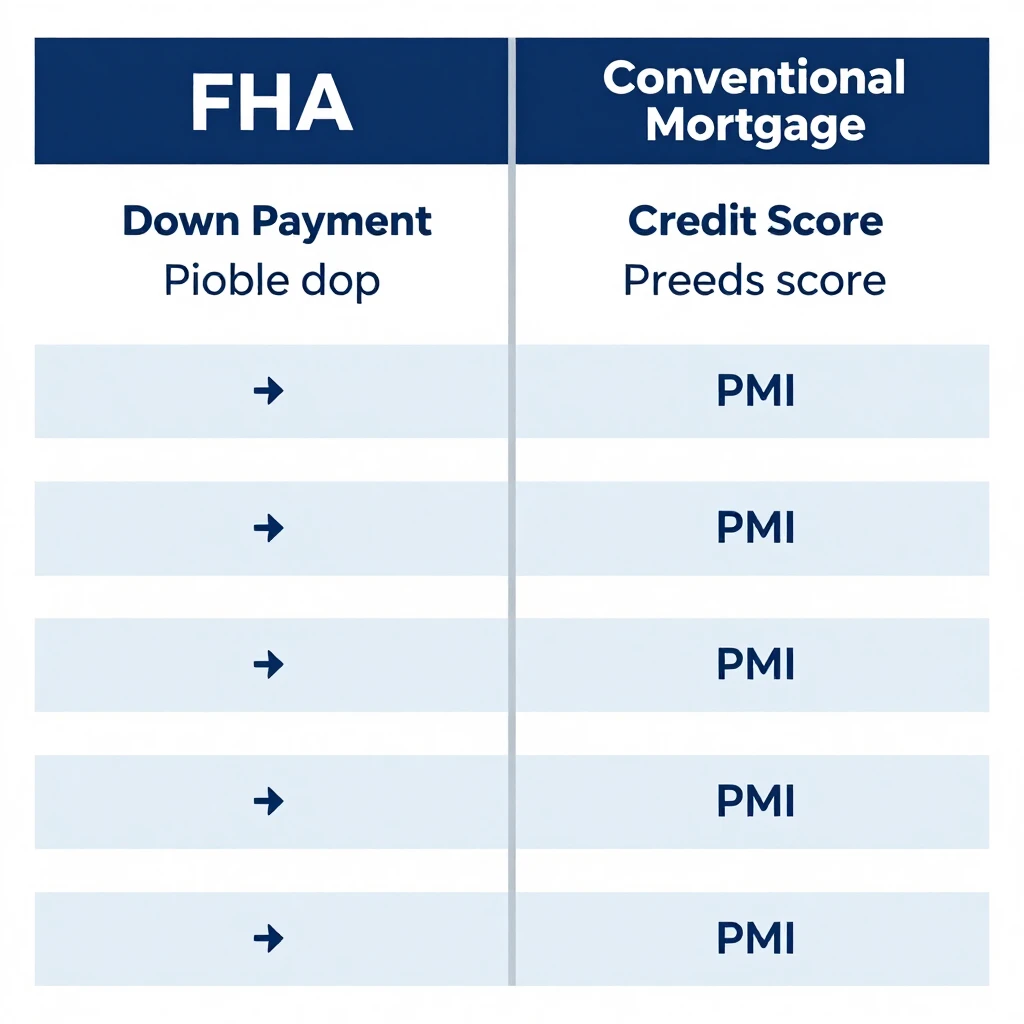
Key Differences at a Glance
Here's a simple table comparing the two in 2026:
| Feature | FHA Mortgage | Conventional Mortgage |
|---|---|---|
| Minimum Down Payment | 3.5% (580+ score) | 3% (varies by program) |
| Credit Score Minimum | 580 (or 500 with 10% down) | Usually 620 |
| Mortgage Insurance | Upfront 1.75% + annual (often lifetime) | PMI if <20% down, removable at 20% equity |
| Loan Limits (1-unit) | $541,287 low-cost, up to $1,249,125 high-cost | $832,750 most areas, up to $1,249,125 high-cost |
| Property Types | Primary residence only | Primary, second home, investment |
FHA loans shine for lower credit scores. Conventional often wins for long-term savings.
Down Payment and Qualification
I helped a client last year with a 550 credit score get an FHA mortgage. She put down 10% and bought her first home. Without FHA, she would have waited years.
Conventional loans now offer 3% down options too. If your score is above 620 and you have steady income, you might qualify easily.
Tip: Build your credit before applying. Even small improvements can open better choices.
Mortgage Insurance Costs
FHA requires upfront mortgage insurance of 1.75% (usually added to the loan) and annual premiums. For most 30-year loans with low down payment, it's around 0.55% per year – and it stays for the life of the loan unless you refinance.
Conventional uses private mortgage insurance (PMI) only if down payment is under 20%. PMI can drop off automatically once you reach 20% equity.
In my experience, buyers who plan to stay long-term often refinance out of FHA to remove that lifetime insurance.
Interest Rates and Overall Costs
Rates for FHA and conventional loans are similar right now. Sometimes FHA edges lower because of the government backing.
But factor in insurance. A conventional loan with 20% down avoids PMI entirely and can cost less monthly.
The Approval Process
FHA mortgage approval process tips: Work with FHA approved lenders. They know the rules inside out.
Gather documents early – pay stubs, tax returns, bank statements. Explain any credit issues upfront.
FHA appraisals are stricter on property condition. The home must meet safety standards.
Conventional appraisals focus more on value. Repairs might be fewer.
Who Should Choose FHA?
- First-time buyers with limited savings
- Credit scores below 620
- Need lower monthly payments early on
FHA helped millions enter homeownership. It's a solid stepping stone.
Who Should Choose Conventional?
- Strong credit (660+)
- 20% down payment ready
- Planning to stay in the home long-term
- Buying a second home or investment
These borrowers often pay less over time.

Real-Life Insights
One family I worked with chose FHA to buy sooner. Two years later, with home value up, they refinanced to conventional and dropped insurance – saving $200 monthly.
Another put 20% down on conventional from the start. No insurance, lower rate – perfect fit.
Talk to lenders about both. Get quotes and compare total costs.
Final Thoughts
Neither loan is better overall – it depends on you. If you're ready to buy now with less upfront, start with FHA. If you can wait and build stronger finances, conventional might save more.
Homeownership is achievable. Take that first step and explore your options at https://example.com/loan-comparison.


