Overview
Buying a home can feel out of reach when saving for a down payment seems impossible. But thousands of local down payment assistance programs exist to help you cover that upfront cost. This guide shows you exactly how to find local down payment assistance programs and turn your homeownership dream into reality.

What Are Down Payment Assistance Programs?
Down payment assistance programs, often called DPA, provide grants, forgivable loans, or low-interest second mortgages to help buyers cover the down payment and sometimes closing costs.
These programs come from state housing agencies, local governments, nonprofits, and even some lenders. Many target first-time buyers—anyone who hasn't owned a home in the last three years.
In 2025, over 2,000 such programs operate across the U.S., according to resources like Down Payment Resource and HUD.
The assistance can be life-changing. For example, on a $300,000 home, a typical 3-5% down payment means $9,000 to $15,000. A DPA program might cover most or all of that, letting you buy sooner.
I've seen friends use these programs to buy their first home with little out-of-pocket cash. One couple I know combined a grant with an FHA mortgage and moved in with just closing costs covered by the seller.
Why Down Payment Assistance Matters for First-Time Buyers
Down payment assistance programs for first-time buyers level the playing field. Without help, many renters stay stuck because saving 20% feels impossible amid rising rents and costs.
These programs often pair perfectly with low-down-payment loans like FHA mortgages, which require just 3.5% down if your credit score is 580 or higher.

Step-by-Step: How to Find Local Down Payment Assistance Programs
Follow these practical steps to uncover programs in your area.
-
Start with a simple Google search
Type "down payment assistance [your city]" or "down payment assistance [your state] 2025". This often surfaces local government pages and current programs. -
Visit HUD's resources
The U.S. Department of Housing and Urban Development (HUD) lists state and local homebuying programs. Go to hud.gov and search for your state's housing finance agency. -
Check Down Payment Resource
This free tool at downpaymentresource.com lets you enter your location and eligibility details to see matching programs. -
Contact your state's housing finance agency
Every state has one—these agencies run many DPA programs. For example, California's CalHFA offers up to 3.5% assistance that pairs with FHA loans. -
Talk to lenders and nonprofits
Many banks like Bank of America have their own grants. Nonprofits in your community might offer targeted help for teachers, veterans, or low-income families.
Programs change yearly, so verify details directly.
Common Types of Assistance
| Type | Description | Repayment? |
|---|---|---|
| Grant | Free money, no repayment | No |
| Forgivable Loan | Forgiven after living in home 5-10 years | No, if conditions met |
| Deferred Loan | No payments until you sell or refinance | Yes, upon sale |
| Low-Interest Second Mortgage | Monthly payments, but low rate | Yes |
Choose based on your long-term plans.
Combining DPA with FHA Loans
FHA mortgages are popular because they allow low down payments and flexible credit. Many down payment assistance programs work seamlessly with FHA loans.
For instance, programs like Chenoa Fund offer 3.5% assistance specifically for FHA buyers, often as a repayable second loan.
FHA loan eligibility basics: - Credit score: 580+ for 3.5% down (500-579 for 10% down) - Steady employment history - Debt-to-income ratio under 43-50% - Primary residence only
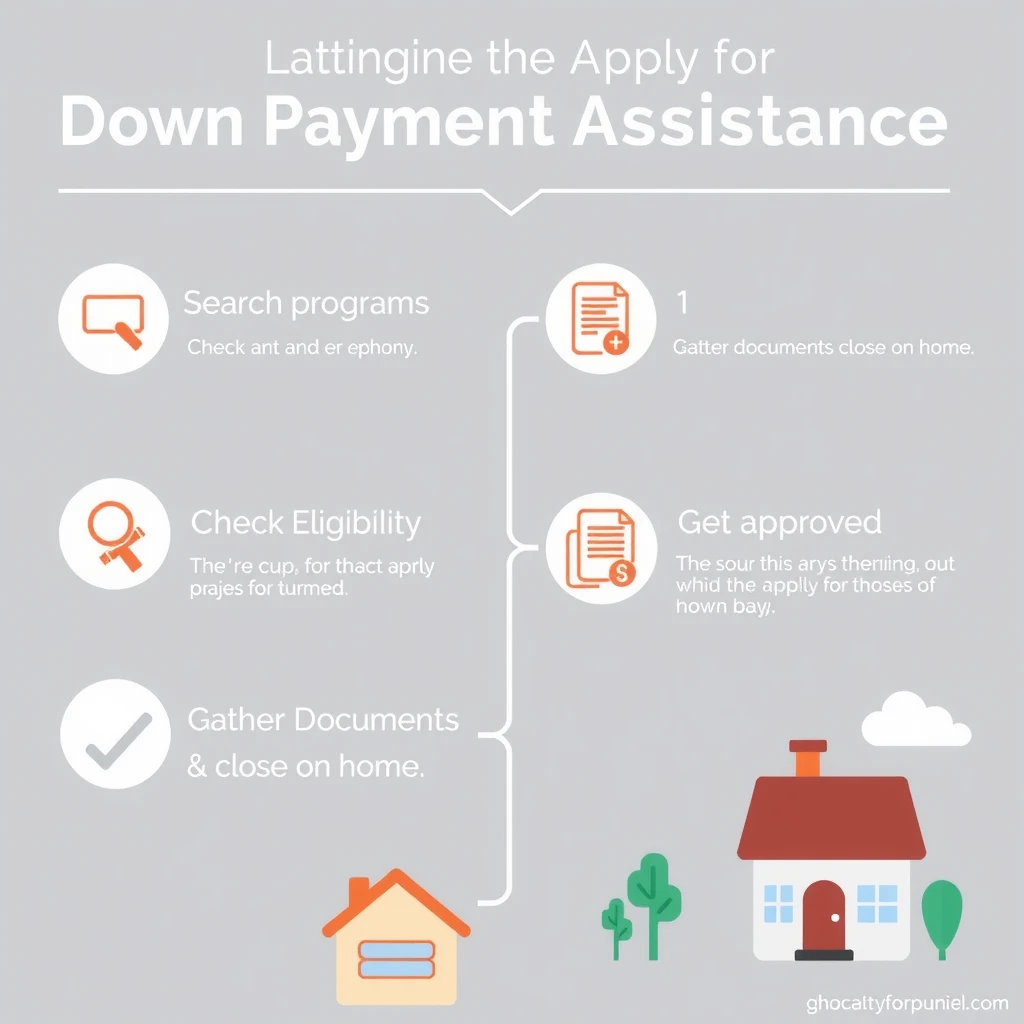
Steps to Apply for an FHA Loan with Assistance
-
Get pre-approved by an FHA-approved lender—they'll check if you qualify for combined DPA.
-
Complete homebuyer education (required for most programs—online classes take 8 hours).
-
Gather documents: pay stubs, tax returns, bank statements.
-
Apply through the program (often via your lender).
-
Close on your home—the assistance funds arrive at closing.
The process adds a few weeks but saves thousands.
From my experience helping family members, the key is starting early. One relative qualified for $15,000 in assistance and bought a home they thought was years away.
Be honest about your income—most programs have limits based on area median income (often 80-120% AMI).
Common Eligibility Requirements
- First-time buyer status
- Income below local limits
- Minimum credit score (often 620-640)
- Home price under program caps
- Complete counseling class
Some programs target specific jobs (teachers, nurses) or areas (rural, revitalization zones).
Potential Challenges and Tips
Not every program has funds year-round—apply when available.
If denied one, try another; options vary widely by location.
Work with an experienced loan officer who knows local programs—they can stack assistance where allowed.
Final Thoughts
You don't have to save for years to buy a home. By learning how to find local down payment assistance programs and pairing them with options like FHA mortgages, many buyers close sooner than expected.
Take that first step today: search your area or talk to a lender. Homeownership is closer than you think.


