media transparent

Subscribe via RSS
Awarded Most Innovative Media 2009
About Transparent

Pat Kitano authors Transparent Real Estate. I'm currently co-Founder, Managing Principal of Domus Consulting Group, a management consulting firm working with real estate brokerages, media/publishing companies, and Web 2.0 companies to develop social media strategies, and with venture investors on new business models.
Since graduating from Cal Berkeley (Geophysics) and Columbia University (MBA), I've been involved in four competitive industries - films, investment banking, internet technology and real estate.
I'm a regular speaker and commentator on real estate industry and technology issues and am always on the lookout for a "transparency" angle.
I welcome contributors... or just send interesting items to pat (at) TransparentRE.com


Asbestos in the Home
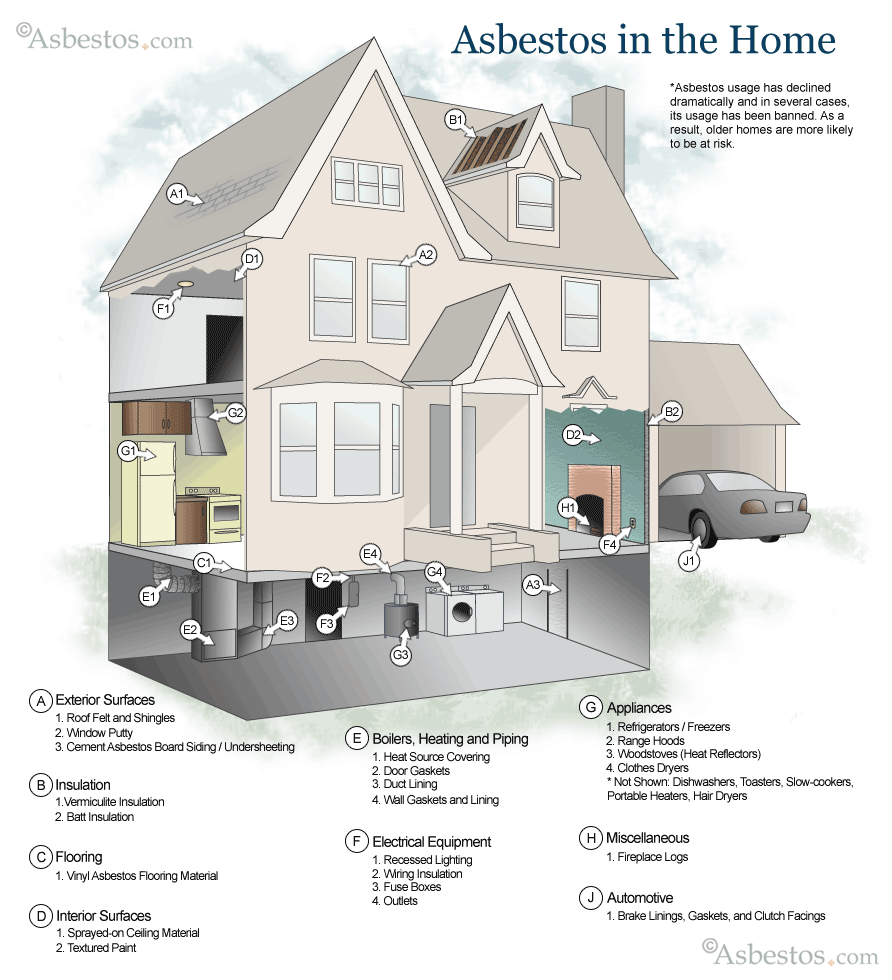 In the world of real estate, there many decisions to be made and information that needs to be accumulated. The path to home ownership is a tremendous accomplishment that will require additional responsibilities. For most people, buying a new home is the largest financial move of a lifetime. So it only makes sense to do plenty of research before plunging into that process.
Homes that are newly bought may require renovation and repairs for people who live near areas that are susceptible to natural disasters. A prominent building material that was used throughout the 20th century is asbestos, a fibrous mineral with many unique qualities. If your home was built prior to 1980, your home may contain asbestos
This is not to imply that you should be immediately worried because with proper precautions, asbestos exposure can be easily prevented. If asbestos is located in the home, the best advice is to leave it un-disturbed as most asbestos is not harmful. There are now many eco-friendly green alternatives that provide safe and healthy ways to insulate your home.
Frequent and long term exposure to its damaged fibers can potentially lead to the development of pleural mesothelioma, a rare, but severe lung ailment. Mesothelioma treatment has varied affects on patients depending on the latency period and age of diagnosis. It must be emphasized that most people who develop an asbestos-related illness are exposed through a substantial length of time.
If any suspected asbestos is located, it should be left un-touched until a home inspector can determine the best course of action. For most situations, the best action is no action. However, if asbestos removal is recommended, it should be performed by a licensed abatement contractor. But once again, if asbestos materials are in good condition, they should not be removed.
Going GREEN Better for Home Owners
Most people are unaware to the fact that Eco-friendly products can cut energy costs by 25 to 35 % per year. Currently, many cities in the U.S. have created lumberyards which re-store where you can purchase recycled building materials that are authentically strong and inexpensive. Green alternatives to asbestos include the use of cotton fiber, lcynene foam and cellulose.
Conducting a study in 2003, the United States Green Building Council (USGBC) conducted a study which estimated a new savings of $50-$65 per square foot for positively constructed green buildings.
Living in a world where environmental sustainability is a vital concern to the future of mankind, it is important to take note of the consequences of improper building materials and environmental degradation. These asbestos alternatives allow for a healthy, safe home, free of health damaging materials
In the world of real estate, there many decisions to be made and information that needs to be accumulated. The path to home ownership is a tremendous accomplishment that will require additional responsibilities. For most people, buying a new home is the largest financial move of a lifetime. So it only makes sense to do plenty of research before plunging into that process.
Homes that are newly bought may require renovation and repairs for people who live near areas that are susceptible to natural disasters. A prominent building material that was used throughout the 20th century is asbestos, a fibrous mineral with many unique qualities. If your home was built prior to 1980, your home may contain asbestos
This is not to imply that you should be immediately worried because with proper precautions, asbestos exposure can be easily prevented. If asbestos is located in the home, the best advice is to leave it un-disturbed as most asbestos is not harmful. There are now many eco-friendly green alternatives that provide safe and healthy ways to insulate your home.
Frequent and long term exposure to its damaged fibers can potentially lead to the development of pleural mesothelioma, a rare, but severe lung ailment. Mesothelioma treatment has varied affects on patients depending on the latency period and age of diagnosis. It must be emphasized that most people who develop an asbestos-related illness are exposed through a substantial length of time.
If any suspected asbestos is located, it should be left un-touched until a home inspector can determine the best course of action. For most situations, the best action is no action. However, if asbestos removal is recommended, it should be performed by a licensed abatement contractor. But once again, if asbestos materials are in good condition, they should not be removed.
Going GREEN Better for Home Owners
Most people are unaware to the fact that Eco-friendly products can cut energy costs by 25 to 35 % per year. Currently, many cities in the U.S. have created lumberyards which re-store where you can purchase recycled building materials that are authentically strong and inexpensive. Green alternatives to asbestos include the use of cotton fiber, lcynene foam and cellulose.
Conducting a study in 2003, the United States Green Building Council (USGBC) conducted a study which estimated a new savings of $50-$65 per square foot for positively constructed green buildings.
Living in a world where environmental sustainability is a vital concern to the future of mankind, it is important to take note of the consequences of improper building materials and environmental degradation. These asbestos alternatives allow for a healthy, safe home, free of health damaging materials 


The Future of Real Estate Blogging Platforms

With the blog now being touted as the new agent website, a newbie to the world of Real Estate 2.0 is confronted with a variety of options to start their blog.
Active Rain's policy change to charge new members $29 for a public blog will stratify the burgeoning agent blog space into three spheres:
1) Blogging "plug & play" platforms Active Rain and HomeGain charge agents for a blog with the value proposition of built in SEO, established traffic, and a mature community.
2) Blogging platforms customizing the Wordpress platform for real estate needs and agent ease of use charge about the same monthly fee as Active Rain and HomeGain, include companies like Tomato, Realivent, Ubertor and Incredible Agent.
3) Free blogging platforms are offered by real estate sites to engage their agent clients. Bloodhound and WannaNetwork offer Wordpress blogs free, which is the most flexible of the free blog alternatives.
Here's my advice:
It's best to get on any blog with your own domain name - all mentioned above allow you to do this. You basically need a central repository for marketing yourself and the blog, not a static website, will do this best going forward.
Here's the future of blogging platforms:
Right now all the blog networks above are essentially separate entities. The future of "blogging" is content syndication where your content - a blog article, a Twitter, a conversation on Facebook or Friendfeed, a newspaper article you bookmarked - is broadcast across multiple places. Eventually the Active Rains, Trulias and HomeGains will start incorporating Facebook/Friendfeed features where the conversations that now happen in places like Trulia Voices can migrate outward across various other platforms, including Facebook itself. These sites will welcome syndication because conversations happening outside their domain (as in Facebook) will draw more consumer traffic back to their sites.
"Conversations need to be heard"
Lesser trafficked sites like Realseekr and Zolve won't grow to be as massive as Active Rain because their current offering is essentially the same as the rest of the blogging platforms. Their best hope for growth is to understand this paradigm shift towards "ubiquitous" conversation, and re-create these conversations within "hybrid blog" platforms by including micro-blogging feeds like Twitter and Facebook, and embracing Facebook Connect (among others) to integrate their networks with Facebook. Then, these networks will no longer exist as isolated social network entities where its walled in members only talk with each other (and eventually leave because they want their conversation heard on a more massive platform that does adopt syndication features).
Active Rain and Pay-to-Play - the Larger Context
On Media Transparent today, I lightly analyzed 9 ways to monetize a social network using enigmatic Twitter as the model - a wildly popular network that eventually will have to declare a revenue model. Real estate has its own beloved Twitter construct in Active Rain, and yesterday, Active Rain announced its new $29/month fee for new members who want to post consumer-facing articles.
The real estate industry is unique in its widespread adoption of
the social media for business networking purposes, and Active Rain’s
ability to connect its real estate agent members with consumers looking
for a Realtor makes pay-to-play an ROI proposition. $29/month may
leverage one lead that can contribute $1,000s in fee income. There are
active discussions on this policy at Active Rain (570 comments+) and Bloodhound Realty Blog.
I believe this is the first pay-to-play move by a large social network of 130,000+ members. (Surprisingly I didn't see any of the tech blogs pick up the story). It’s a courageous and laudable move that can be only assessed in hindsight based on future adoption rate.
In the larger context, Active Rain's decision is not about whether social networks should always be free, it's about business model credibility. It's important not to sit on the "tried and true" when in the long (or even short) run, the model cannot sustain profitability and thus the business. Every new iteration of the social network business model will yield another business model because the business ecosystem adapts to it, so it's important to take bold steps.
Network Generation is the Next Lead Generation
It's not the Realtor's duty to get their friends on the social networks, just explaining how to login to a new Facebook account takes too much time. We think "Network Generation" - getting a Realtor's immediate sphere of influence up on social networks - is essential to building a massive communal referral system.
So there's five components to Network Generation to make your social media strategy successful:
- Get all your friends, past clients, affiliates (title, appraisers, etc.) and hubs of your community (councilpeople, businesses, organizations you belong to) up and running on social media
- Make sure they know what they're doing, or their networking will be dormant (you know that happens when you can't figure out how to use a social media application like Twitter)
- Help your contacts to grow their own networks, because when they grow their networks, they will feed VIRALLY and MULTIPLY into your network (it's mathematics).
- Form systems of referrals across your network, you're not limited to one business networking group meeting weekly in a coffee shop any more.
- Make sure you and your contacts understand how to use applications like Facebook, Linkedin and Twitter to best effect.
Washington Post Chooses Best of Breed over Vanilla Vendors


Online newspaper's real estate offerings still have the canned feel of third party vendorland, an afterthought slapped on by business managers without the luxury of a classified ad sales force, with the implied consent from editors who could care less about real estate coverage. The generic vendor offerings seemed old with none of the interactive features that characterize the Web 2.0 sites.
Washington Post has picked best of 2.0 breed by replacing its current listings search vendor HomeFinder with Trulia and added HomeGain's home valuation tool. HomeGain is now live on WP and any query goes directly to the HomeGain site, an apparent change in the website philosophy of keeping users contained within the site. Trulia will likely implement a white label version for WP similar to their Village Voice offering.
It's refreshing to see media companies adopting the latest iterations of technology instead of falling back on vendors they used ten years ago through inertia.
Vultures Waiting for Chow Time

The NY Times reports on what any Wall Street observer can see is quite obvious. Obama & crew are now "inviting" the private sector - hedge funds, vulture funds - to buy up toxic loans as a means to move them off banks' balance sheets more quickly.
Simply put, we'll see the private sector sitting, watching and salivating because they know Obama and the Treausry are impatient and need to close a deal. The hedge funds want low risk, high reward and are quite willing to wait it out for a great deal. The less savvy Treasury will eventually bumble into one.
This is a classic poker table standoff where the guy with all the chips just keeps holding out until the rest of the table drops out one by one. This standoff is being played out on a number of fronts - most prominently with the banks limiting their lending and with the Congressional partisan divide on the stimulus plan - and the postponement of normalcy feeds the pessimism, especially when accompanied with daily layoff announcements.
This political dynamic of the standoff is the reason why the masses perceive the world's economies falling into a sinkhole. Today's vague, uncertain announcements on the progress of the stimulus package just reflects this frustrating state of affairs we're in. Today's selloff was a natural.
Facebook Networks aren't Walled
Your Facebook profile only seems limited to viewing by your friends. In fact, people who aren't your friend but in your second degree sphere of separation can see your profile if one of your friends has written on your "wall" just by clicking on the wall. One can also click from "wall" to "wall" to see profiles beyond the second degree sphere.

(if you want to check out my Facebook, all you need to find is someone who wrote on my "wall")
Why is this an "intel" issue? Parents can use this fact to "spy" on their kid's Facebook friends, and also see check on whether their kids have secret Facebook accounts. Likewise, some real estate professionals may want to keep their Facebook/social network hidden from their competition. The fact is they can't. Frankly, a completely new mindset is necessary - who cares if your competition sees where you have solid networks - clubs, organizations, etc.? Letting your competition know your networking strategies won't affect your business.
The Classic Real Estate Marketing Mistake

I don't mean to pick on new Twitterers, but just want to show a common example I see all the time on new real estate Twitterers. The first inclination of a real estate agent is to use any media, social, publication or otherwise, as an advertising platform. There's no content, the first impression is distasteful.
At Active Rain, I've listed 10 steps on how to attract a social network on Twitter. It's simply the best application to build a following.
(I hope the Harmans know they can delete all their tweets and start all over again).
Opaque Bank Accounting of Repossessed Homes may be a Problem
"The lenders are simply trying to defer the losses to a later date, because having to recognize the losses short term might pose severe risks to the banks in question."
What does that mean? Well, when the properties are taken back by the bank at auction, they are often taken back for the value of the mortgage on the property. The bank puts in the bid for the value of the current mortgage and essentially pays itself back what it lost on the loan, and of course gets the house for all its trouble. In good times, the bank could profit by selling that house for more than the value of the loan, but not these days. The trouble now is just the opposite. On so many of these foreclosed homes, the property is actually worth far less than the mortgage on it. So the bank is taking it back at the mortgage value and not writing it down.
"Untold numbers of these properties sitting on banks accounting ledgers where the imputed value is considerably higher than the market value," says Sharga. And unfortunately nobody knows what that market number is.This is a bank accounting trick that exposes the vulnerability of TARP and any blanket government bank rescue plans. Opaque asset accounting perpetuates the same ethos that allowed banks to make bad loans in the first place; now they can hide distressed assets until later and tap into future rescue funding. There is a lot more potential for "moral hazard" caused by bailouts than by the original Bernanke moral hazard statement in 2007 when he thought lowering interest rates would recreate the hazardous lending of the early 2000's.
Unfriending

HomeGain's Louis, who has become a 5 tweet per day guy, sent me this NY Times article this morning Friends Until I Delete You. It's an amusing series of interviews about the politics of unfriending your friends on Facebook.
I've been on record that you shouldn't unfriend/unfollow any stranger (unless they are unsavory) who wants to follow you because they may be interested in hiring you as a real estate professional. An unfriend is not the best relationship building action.
Related articles:
The Politics of Unfollowing
Managing Massive Social Networks while Retaining Community