Overview
Saving for a bigger down payment can feel overwhelming, but it’s a game-changer for homebuyers. A larger down payment reduces your mortgage amount, lowers monthly payments, and can secure better interest rates. This guide shares actionable tips, personal insights, and steps to prepare for your mortgage application, making your dream home more attainable.
Why a Bigger Down Payment Matters
When I bought my first home, I learned quickly that the down payment sets the tone for your mortgage. A bigger down payment—ideally 20% or more—means borrowing less, which saves you thousands in interest over the life of the loan. It also shows lenders you’re financially disciplined, often leading to better mortgage terms.
For example, on a $300,000 home, a 20% down payment is $60,000, leaving a $240,000 mortgage. Compare that to a 5% down payment ($15,000), where you’d borrow $285,000. The larger loan means higher monthly payments and more interest over time. Plus, with less than 20% down, you might need to pay private mortgage insurance (PMI), adding to your costs.

Step 1: Create a Realistic Savings Plan
Saving for a down payment starts with a clear plan. First, set a target. Research home prices in your area to estimate what 20% might look like. For a $400,000 home, that’s $80,000. Break it down into monthly goals—saving $80,000 over three years means setting aside about $2,222 per month.
Here’s how to make it happen:
- Track your spending: Use apps like Mint or YNAB to see where your money goes. I found cutting small expenses, like daily coffee runs, added up fast.
- Set up a dedicated savings account: Open a high-yield savings account for your down payment. Automate transfers to avoid temptation.
- Cut non-essentials: Skip subscriptions or dining out for a while. Redirect that money to your savings.
- Boost income: Consider side gigs like freelancing or selling unused items. I sold old furniture online and added $500 to my fund in one weekend.
Step 2: How to Improve Your Credit Score for Better Rates
Your credit score directly impacts your mortgage interest rate. A higher score can save you thousands over the life of your loan. When I started, my score was 650—not terrible, but not great. By focusing on a few key areas, I raised it to 720 in a year, qualifying for a lower rate.
Here’s how to improve your credit score for better rates:
- Pay bills on time: Late payments hurt your score. Set up autopay to avoid missing due dates.
- Reduce debt: Pay down credit card balances to keep your credit utilization below 30%. For example, if your card has a $10,000 limit, keep the balance under $3,000.
- Check your credit report: Errors can drag your score down. Get free reports from AnnualCreditReport.com and dispute inaccuracies.
- Avoid new credit: Don’t open new credit cards or loans while saving—it can lower your score temporarily.
A 2023 study from Experian showed that borrowers with scores above 760 got rates about 0.75% lower than those with scores around 620. On a $300,000 loan, that’s a savings of $100 per month.

Step 3: Maximize Your Income and Savings
To save faster, think beyond cutting costs—boost your income. I took on freelance graphic design work, which added $1,000 a month to my savings. Other ideas include:
- Ask for a raise: If you’re due for one, make a case based on your performance.
- Side hustles: Drive for rideshare apps, tutor, or sell crafts online.
- Tax refunds: Direct any tax refunds or bonuses straight to your down payment fund.
Also, look into down payment assistance programs. Many states offer grants or low-interest loans for first-time buyers. For example, the U.S. Department of Housing and Urban Development (HUD) lists programs by state on their website (hud.gov). These can supplement your savings significantly.
Step 4: Required Documents for Mortgage Application
When you’re ready to apply for a mortgage, being prepared makes the process smoother. Lenders need to verify your financial stability, so gather these required documents for a mortgage application early:
| Document | Purpose |
|---|---|
| Pay stubs (last 30 days) | Prove steady income |
| Tax returns (last 2 years) | Show income history |
| Bank statements (last 2-3 months) | Verify savings and cash flow |
| Photo ID | Confirm identity |
| Credit report | Assess creditworthiness |
| Proof of assets (e.g., 401(k) statements) | Show additional financial resources |
I made the mistake of not having all my documents ready, which delayed my application. Organize them in a digital folder or binder to save time. Check with your lender for any additional requirements, like proof of gift funds if someone’s helping with your down payment.
Step 5: Stay Disciplined and Motivated
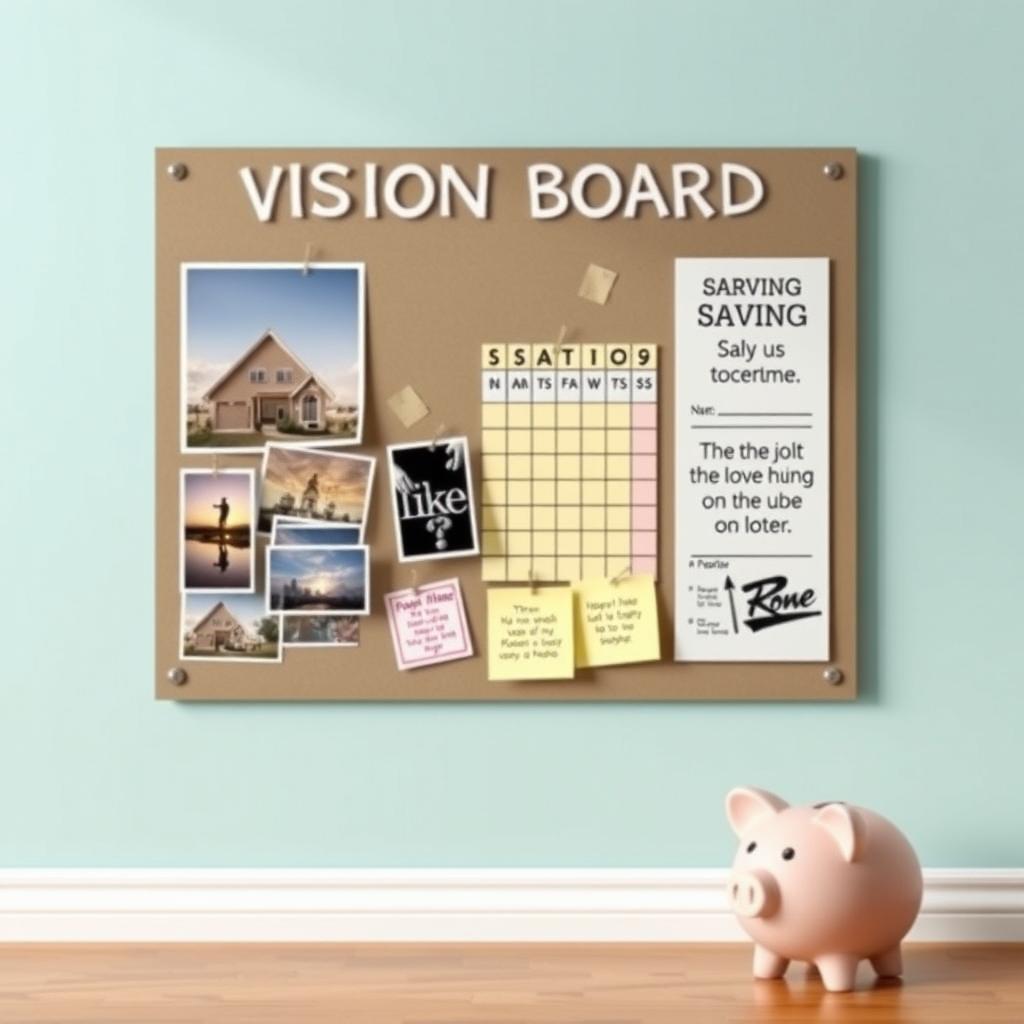
Saving for a down payment takes time, and it’s easy to lose focus. I kept myself motivated by visualizing my future home—pinning pictures of cozy kitchens on a vision board. Break your goal into milestones, like saving the first $10,000, and celebrate small wins. Share your goal with supportive friends or family to stay accountable.
Avoid lifestyle creep. When I got a raise, I was tempted to upgrade my car but funneled the extra income into savings instead. It paid off when I closed on my home with a 25% down payment, avoiding PMI entirely.
Common Mistakes to Avoid
- Dipping into savings: Don’t touch your down payment fund for non-emergencies.
- Ignoring your credit: A low score can cost you better rates. Monitor it regularly.
- Overlooking assistance programs: Many buyers miss out on grants or loans that could help.
- Not shopping lenders: Compare at least three lenders for the best mortgage terms.
When I started, I didn’t compare lenders and almost locked in a higher rate. Shopping around saved me 0.5% on my mortgage, which added up to $20,000 over 30 years.
Summary
Saving for a bigger down payment is a marathon, not a sprint. Start with a clear savings plan, improve your credit score for better rates, and gather required documents for your mortgage application early. Boost income, cut expenses, and stay disciplined to reach your goal. With patience and strategy, you’ll be ready to buy your dream home with confidence.


