Overview
FHA loans make homeownership accessible with low down payments and flexible credit requirements, but they come with limits. Understanding FHA loan limits by county is key to knowing how much you can borrow. This guide breaks down 2025 limits, qualification steps, closing costs, and tips for first-time buyers.
What Are FHA Loan Limits?
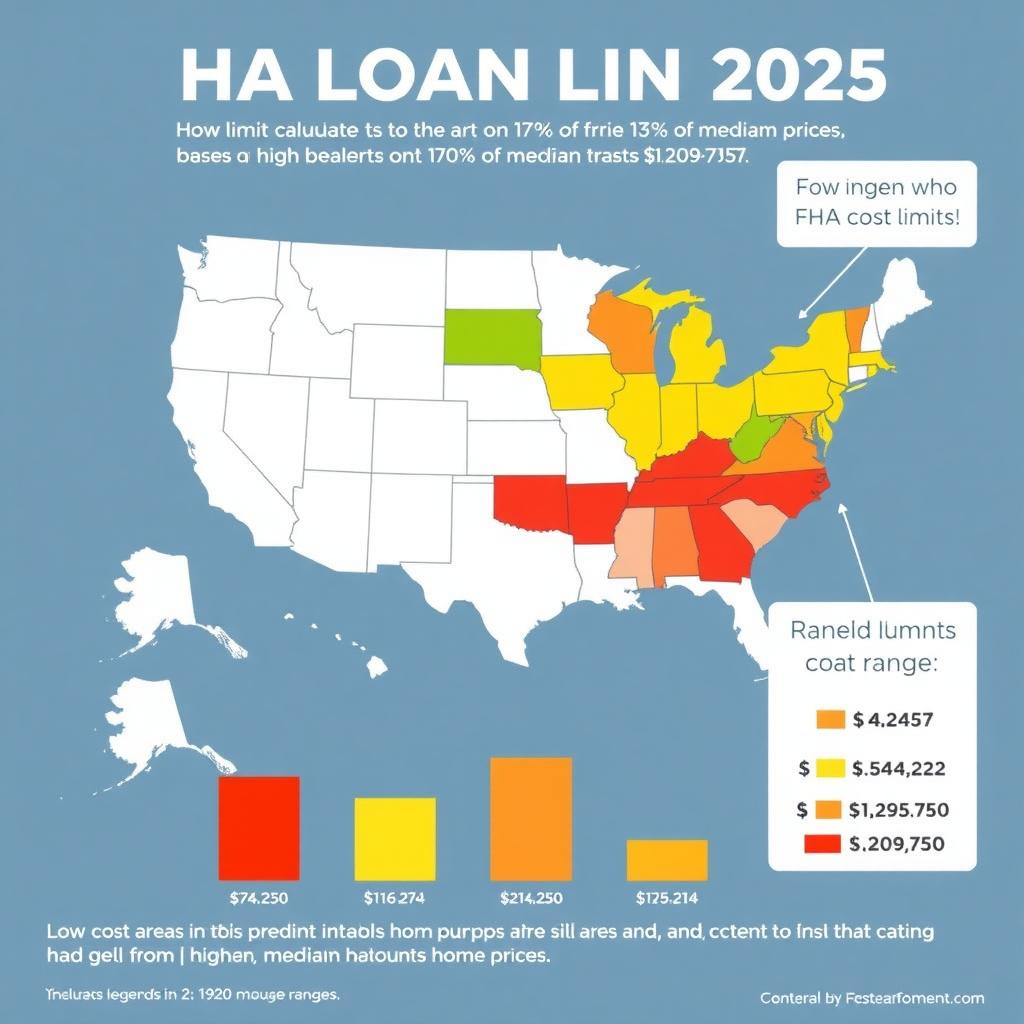
FHA loans, insured by the Federal Housing Administration, help middle- and working-class Americans buy homes. Unlike conventional loans, they offer lower down payments and easier credit rules. However, the FHA caps how much you can borrow based on where you’re buying. These caps, called FHA loan limits, vary by county and are tied to local median home prices. For 2025, limits range from $524,225 in low-cost areas to $1,209,750 for single-family homes in high-cost counties like San Francisco or New York City. Special areas like Alaska and Hawaii can go as high as $1,633,950 for a single-family home.
The Department of Housing and Urban Development (HUD) sets these limits annually, using 115% of the median home price in each county. This ensures FHA loans target modest homes, not luxury properties. For example, a county with a median home price of $600,000 would have a limit of $690,000 (115% of $600,000), unless it falls below the national floor or above the ceiling. Knowing your county’s limit helps you plan your home search realistically.
How Are FHA Loan Limits Determined?
HUD calculates FHA loan limits by county using the Federal Housing Finance Agency’s Home Price Index. They take the median home price for a county and multiply it by 115%. If this number falls between the national floor ($524,225 for single-family homes in 2025) and ceiling ($1,209,750), it becomes the county’s limit. In high-cost areas like Los Angeles, the limit hits the ceiling. In rural areas, it sticks to the floor. Special exception areas like Guam or the Virgin Islands get higher limits due to elevated housing costs.
Limits also vary by property type. Here’s a quick breakdown for 2025:
| Property Type | Low-Cost Areas | High-Cost Areas | Special Exception Areas |
|---|---|---|---|
| Single-Family | $524,225 | $1,209,750 | $1,633,950 |
| Two-Family | $671,200 | $1,548,975 | $2,092,150 |
| Three-Family | $811,275 | $1,872,225 | $2,528,775 |
| Four-Family | $1,008,300 | $2,326,875 | $3,142,800 |
You can check your county’s limit on HUD’s official website for precise figures.
How to Qualify for an FHA Loan
Qualifying for an FHA loan is easier than for conventional loans, making it a go-to for first-time buyers. Here’s what you need:
- Credit Score: A minimum of 580 for a 3.5% down payment. With a score of 500-579, you’ll need 10% down.
- Debt-to-Income Ratio (DTI): Your housing expenses shouldn’t exceed 31% of your gross income, and total debt (including housing) should stay under 43%.
- Employment History: Two years of steady employment, preferably with the same employer.
- Income: No minimum, but you must prove you can afford payments.
- Property Requirements: The home must be your primary residence and meet FHA safety and appraisal standards.
Lenders also look at your financial stability. For example, I once helped a friend navigate this process. She had a 590 credit score and a part-time job but qualified by showing consistent freelance income. It’s not just about numbers—lenders want to see you can manage the loan. Check with HUD-approved lenders for specifics, as some may have stricter rules.

FHA Mortgage Closing Costs Breakdown
Closing costs for FHA loans typically range from 2% to 6% of the loan amount. For a $200,000 loan, that’s $4,000 to $12,000. Here’s a typical breakdown:
- Origination Fee: 1% of the loan amount (e.g., $2,000 for a $200,000 loan).
- Appraisal Fee: $300-$500 to ensure the home meets FHA standards.
- Title Insurance and Search: $700-$2,000 to verify property ownership.
- Credit Report: $30-$50 to check your credit history.
- Inspection Fees: $200-$400 for optional pest or structural checks.
- Upfront Mortgage Insurance Premium (MIP): 1.75% of the loan amount ($3,500 for $200,000), often rolled into the loan.
- Other Fees: Escrow, recording, and courier fees ($500-$2,000 total).
Unlike conventional loans, FHA loans require MIP, which protects lenders if you default. You’ll also pay monthly MIP, typically 0.85% of the loan annually. I’ve seen buyers negotiate seller concessions to cover some costs, which saved my cousin $3,000 when she bought her first home. Always ask about this option.
Tips for First-Time Homebuyers: Navigating FHA Mortgages
Buying your first home with an FHA loan can feel overwhelming, but these tips can smooth the process:
- Check Your County’s Limit Early: Use HUD’s lookup tool to know your borrowing cap before house hunting. This avoids falling in love with a home you can’t afford.
- Boost Your Credit Score: Pay down credit card debt or fix errors on your report to hit the 580 score for a lower down payment.
- Shop Multiple Lenders: Rates and fees vary. My neighbor saved $1,500 by comparing three FHA-approved lenders.
- Budget for MIP: Factor in the upfront and monthly mortgage insurance premiums when planning your finances.
- Consider Seller Concessions: Ask the seller to cover part of your closing costs, up to 6% of the home price.
- Get Pre-Approved: This shows sellers you’re serious and helps you move fast in competitive markets.
When I bought my first home, pre-approval made all the difference. I beat out another offer because my lender had already vetted me. Also, don’t skip the home inspection—FHA appraisals don’t cover everything, and you don’t want surprises.

Why FHA Loan Limits Matter
FHA loan limits by county shape your homebuying power. In low-cost areas, the $524,225 cap might cover most homes, but in places like California, you’ll need to target modest properties to stay within the $1,209,750 limit. Exceeding the limit means exploring jumbo loans, which require higher credit scores and down payments. Understanding these limits helps you set realistic expectations and avoid wasting time on unaffordable homes.
For authoritative data, visit HUD’s FHA Mortgage Limits page to look up limits by county. The National Association of Realtors also offers insights on how these limits affect affordability. If you’re curious about broader mortgage options, the Consumer Financial Protection Bureau explains loan types clearly.
Summary
FHA loan limits by county cap how much you can borrow, ranging from $524,225 to $1,209,750 in 2025, based on local home prices. Qualifying requires a 580 credit score for a 3.5% down payment, a solid debt-to-income ratio, and a home that meets FHA standards. Closing costs, including MIP, can add 2-6% to your loan. First-time buyers should check limits early, compare lenders, and consider seller concessions to save money. With these steps, FHA loans can make your homeownership dream a reality.


