The Federal Housing Administration (FHA) has specific guidelines for appraisals to ensure that properties meet certain standards before they can be financed with an FHA loan. These guidelines are designed to protect both the borrower and the lender by ensuring the property is safe, sound, and secure. In this article, we'll explore the key aspects of FHA appraisal guidelines, including what to expect during the appraisal process and how it can impact your FHA mortgage.

What is an FHA Appraisal?
An FHA appraisal is a comprehensive evaluation of a property's value and condition conducted by a licensed appraiser who is approved by the FHA. Unlike a standard home appraisal, which primarily focuses on determining the market value of the property, an FHA appraisal also ensures that the home meets the FHA's Minimum Property Standards (MPS). These standards are in place to confirm that the property is safe, structurally sound, and free from health hazards.
The appraisal is a critical step in the FHA loan process because it protects both the borrower and the lender. For the borrower, it ensures that they are not overpaying for a property that may have significant issues. For the lender, it reduces the risk of lending on a property that might not hold its value or could require costly repairs.
During the appraisal, the appraiser will:
- Measure the property to verify its size and layout.
- Inspect the interior and exterior for any visible defects or safety hazards.
- Assess the condition of major systems, such as plumbing, electrical, and heating.
- Evaluate the property's overall marketability and compare it to similar homes in the area.
If the appraiser identifies any issues that do not meet the FHA's standards, they will note these in the appraisal report. Depending on the severity of the issues, the lender may require repairs to be made before the loan can be approved.
Key FHA Appraisal Requirements
To qualify for an FHA loan, a property must meet the FHA's Minimum Property Standards (MPS). These standards cover a wide range of aspects, including:
- Safety: The property must be free from hazards that could affect the health and safety of the occupants. This includes issues like lead-based paint, faulty wiring, or structural problems.
- Security: The home must provide a secure living environment. This means that doors, windows, and other entry points should be functional and lockable.
- Soundness: The property must be structurally sound, with no significant defects in the foundation, roof, or other critical components.
Some specific requirements include:
- Roof: The roof must be in good condition and have at least two years of remaining life. If the roof is nearing the end of its lifespan, the appraiser may require repairs or replacement.
- Heating and Cooling: The property must have adequate heating and cooling systems. In colder climates, this typically means a functioning furnace or boiler.
- Plumbing and Electrical: All plumbing and electrical systems must be up to code and in good working order. This includes ensuring that there are no leaks, exposed wires, or other safety issues.
- Access: The property must have safe and adequate access to the street. This includes a driveway or walkway that is in good condition.
- Pest Infestations: The property must be free from termites and other pests that could damage the structure.
If the property does not meet these standards, the appraiser will note the deficiencies in the appraisal report, and the lender may require corrections before approving the loan.
To help illustrate these requirements, here's a quick checklist:
- [ ] Property is free of safety hazards
- [ ] Roof has at least two years of life left
- [ ] Heating and cooling systems are functional
- [ ] Plumbing and electrical systems are up to code
- [ ] Safe access to the street
- [ ] No pest infestations
The FHA Appraisal Process
The FHA appraisal process typically follows these steps:
- Ordering the Appraisal: Once you've applied for an FHA loan, your lender will order the appraisal from an FHA-approved appraiser. The cost of the appraisal is usually paid by the borrower as part of the closing costs.
- Scheduling the Visit: The appraiser will contact the seller or the real estate agent to schedule a time to visit the property. It's important that the property is accessible and that all utilities are turned on for the inspection.
- On-Site Inspection: During the visit, the appraiser will thoroughly inspect both the interior and exterior of the property. They'll take measurements, photographs, and notes on the condition of the home. They'll also assess the neighborhood and compare the property to similar homes that have recently sold.
- Evaluating the Property: The appraiser will evaluate whether the property meets the FHA's Minimum Property Standards. If there are any issues, they'll document them in the appraisal report.
- Determining the Value: Based on their inspection and comparable sales data, the appraiser will determine the property's market value. This value must be sufficient to support the loan amount.
- Submitting the Report: The appraiser will submit their report to the lender, who will review it to ensure that the property meets all FHA requirements. If there are any issues, the lender may require repairs or further inspections.
The entire process usually takes about a week, but it can vary depending on the appraiser's schedule and the complexity of the property.
FHA vs. Conventional Appraisals
While both FHA and conventional appraisals aim to determine a property's value, there are some key differences:
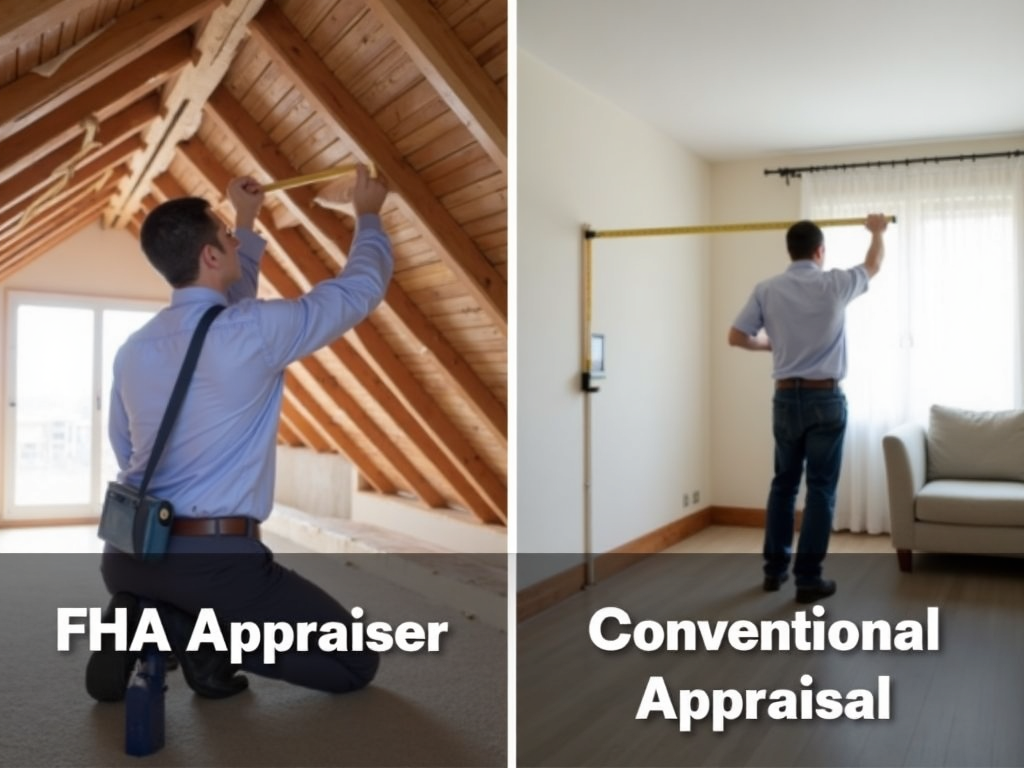
- Stringency: FHA appraisals are generally more stringent than conventional appraisals because they include an assessment of the property's condition in addition to its value. Conventional appraisals focus primarily on value.
- Minimum Standards: FHA appraisals require the property to meet specific minimum standards for safety, security, and soundness. Conventional appraisals do not have these requirements.
- Repair Requirements: If an FHA appraisal identifies issues that do not meet the minimum standards, repairs may be required before the loan can be approved. In contrast, conventional loans may allow the buyer to negotiate repairs with the seller or proceed with the purchase as-is.
- Appraiser Qualifications: FHA appraisals must be conducted by appraisers who are approved by the FHA and have completed additional training. Conventional appraisals can be done by any licensed appraiser.
Because of these differences, it's important for buyers and sellers to understand what to expect if they're involved in an FHA loan transaction.
To visualize this, here's a comparison table:
| Feature | FHA Appraisal | Conventional Appraisal |
|---|---|---|
| Focus | Value and condition | Primarily value |
| Minimum Standards | Yes, must meet MPS | No |
| Repair Requirements | Often required | Negotiable |
| Appraiser Qualifications | FHA-approved | Licensed appraiser |
Preparing for an FHA Appraisal
If you're selling a home that will be financed with an FHA loan, there are several steps you can take to prepare for the appraisal:
- Clean and Declutter: Make sure the property is clean and free of clutter. This not only makes a good impression but also allows the appraiser to easily access all areas.
- Address Obvious Issues: If there are any obvious problems, such as peeling paint, broken windows, or leaky faucets, try to fix them before the appraisal. This can help avoid delays in the loan process.
- Ensure Access: Make sure the appraiser can access all parts of the property, including the attic, basement, and any outbuildings. If there are locked doors or gates, provide keys or access codes.
- Turn On Utilities: Ensure that all utilities are turned on so the appraiser can test the plumbing, electrical, and heating systems.
- Provide Documentation: If you've made any recent repairs or upgrades, provide documentation to the appraiser. This can help justify the property's value and condition.
By taking these steps, you can help ensure that the appraisal goes smoothly and that any potential issues are addressed proactively.
Common Misconceptions About FHA Appraisals
There are several misconceptions about FHA appraisals that can lead to confusion:
- Misconception 1: The appraisal is the same as a home inspection. While both involve evaluating the property, they serve different purposes. The appraisal focuses on value and meeting FHA standards, while a home inspection is a more detailed examination of the property's condition.
- Misconception 2: The appraiser works for the buyer. Actually, the appraiser is hired by the lender to provide an independent assessment of the property. Their report is used to determine whether the property meets the lender's and FHA's requirements.
- Misconception 3: If the property doesn't meet FHA standards, the deal is off. Not necessarily. If there are minor issues, the seller may agree to make repairs, or the buyer may be able to negotiate a solution with the lender.
- Misconception 4: FHA appraisals are only for older homes. FHA appraisals are required for all properties being financed with an FHA loan, regardless of age. However, older homes may be more likely to have issues that need to be addressed.
Understanding these misconceptions can help buyers and sellers navigate the appraisal process more effectively.

Summary
FHA appraisal guidelines are an essential part of the home buying process for anyone using an FHA loan. These guidelines ensure that the property is safe, secure, and a sound investment for both the borrower and the lender. By understanding what to expect during the appraisal and how to prepare, you can help make the process smoother and increase your chances of a successful transaction.
If you're considering an FHA loan or have questions about the appraisal process, it's a good idea to consult with a qualified real estate agent or mortgage lender. They can provide personalized advice and help you navigate the complexities of the FHA loan process.


