Quick Overview
Buying a home with an FHA mortgage can feel exciting yet overwhelming. If you're wondering how to calculate FHA mortgage closing costs, you're in the right place. These fees typically add up to 2% to 6% of your loan amount—think $6,000 to $18,000 on a $300,000 loan. In this guide, we'll break it down simply, share real tips, and help you save. Let's make homeownership less stressful.

What Makes FHA Mortgages Special?
FHA mortgages, backed by the Federal Housing Administration, help folks like first-time buyers or those with lower credit scores get into a home. You can put down just 3.5% if your credit score hits 580 or higher. But remember, FHA mortgage guidelines come with extras like mortgage insurance premiums (MIP) that boost your closing costs.
I recall when my cousin used an FHA loan last year. She worried about the upfront fees, but understanding them early made the process smoother. These loans follow strict FHA mortgage guidelines to protect borrowers, ensuring fair practices.
FHA Mortgage Closing Costs Breakdown
Let's dive into the FHA mortgage closing costs breakdown. These aren't random charges—they cover everything from inspections to insurance. Expect to pay at closing, separate from your down payment.
Here's a simple table of common costs based on a $300,000 loan (averages from 2025 data):
| Cost Type | Description | Typical Amount |
|---|---|---|
| Upfront MIP | One-time insurance fee | $5,250 (1.75%) |
| Origination Fee | Lender's processing | $1,500–$3,000 (0.5–1%) |
| Appraisal | Home value check | $400–$700 |
| Title Insurance | Protects against ownership issues | $1,000–$2,000 |
| Credit Report | Your financial background | $30–$50 |
| Prepaid Taxes/Insurance | Escrow setup | $2,000–$4,000 |
| Recording Fees | Legal filing | $100–$300 |
| Total Estimate | $10,280–$15,300 (3.4–5.1%) |
These numbers can shift by location and lender. For exacts, check HUD's FHA resources.
The upfront MIP is non-negotiable under FHA mortgage guidelines—it's 1.75% of your loan and can be rolled into the loan to ease cash flow. Annual MIP adds 0.15% to 0.75% to your monthly payment, depending on your down payment and loan term.
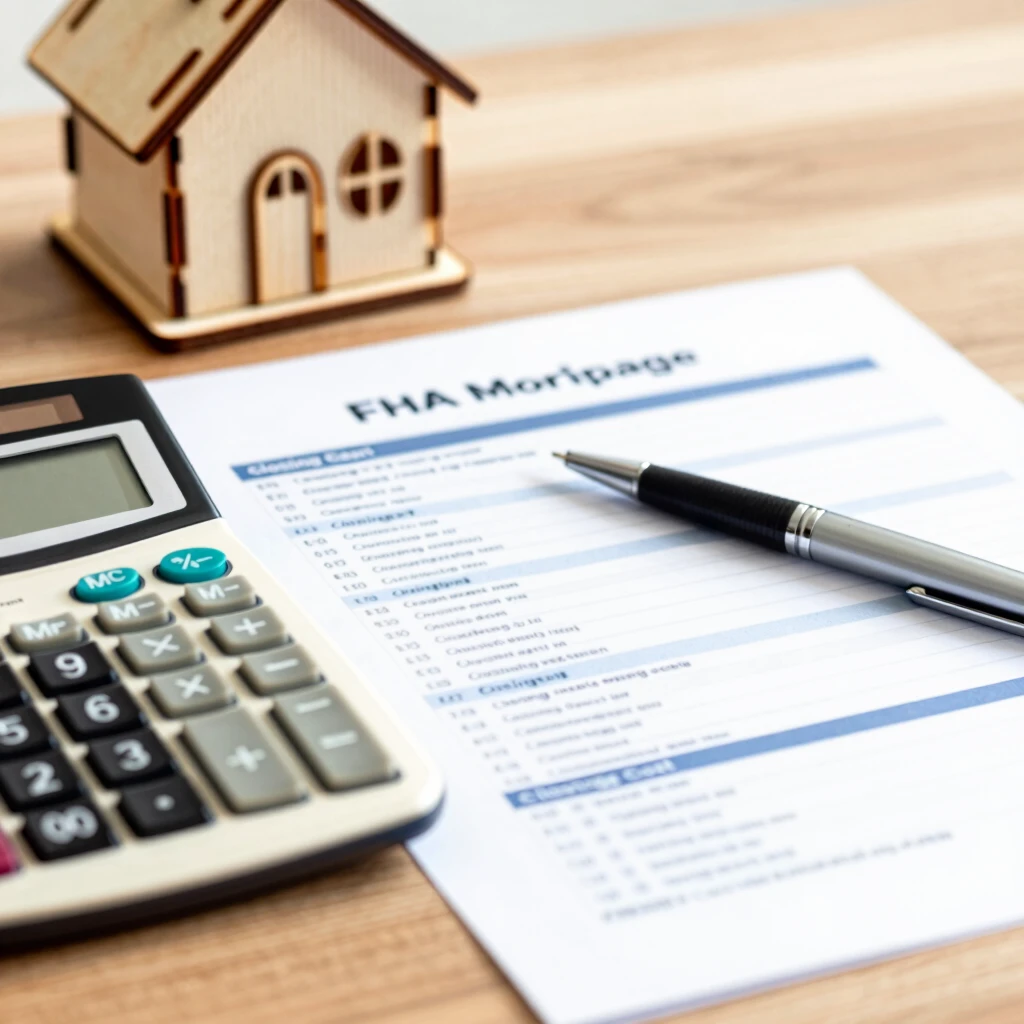
How to Calculate FHA Mortgage Closing Costs
Ready to crunch numbers? How to calculate FHA mortgage closing costs starts with your loan estimate—a form your lender must give you within three days of applying. It lists all fees upfront.
Step 1: Grab your loan estimate. Add lender fees (origination, points) first.
Step 2: Tally third-party costs like appraisal and title search. Shop around—these aren't set by your lender.
Step 3: Factor in prepaids. Use online calculators from sites like Bankrate for quick math.
Step 4: Include the upfront MIP: Multiply loan amount by 0.0175.
Example: For a $250,000 loan—UFMIP = $4,375. Add $1,250 origination, $500 appraisal, $1,500 title = $7,625 base. Prepaids might push it to $10,000.
Three days before closing, get the closing disclosure. Compare it to your estimate—fees can't jump more than 10% without reason, per FHA rules.
Pro tip: Use a spreadsheet. List each fee, note if it's fixed or shoppable, and track changes. When I guided a friend through this, spotting a high title fee saved her $400 by switching providers.
Key FHA Mortgage Guidelines on Closing Costs
FHA mortgage guidelines keep things fair. Lenders can't charge over 1% for origination. Sellers can cover up to 6% of the sale price in concessions—that could wipe out your closing costs!
No prepayment penalties mean you can refinance later without fees. Also, gifts from family count toward costs, but need a letter stating no repayment expected.
Stay updated via FHA.com—they break down 2025 limits, like $524,225 for most single-family homes.
How to Choose the Right FHA Lender
Picking a lender matters big time. How to choose the right FHA lender? Start by comparing at least three. Look for FHA-approved ones via HUD's list.
Focus on: - Low fees: Scan loan estimates for origination under 1%. - Customer service: Read reviews on responsiveness. - Extras: Some offer credits or no-closing-cost options (higher rate trade-off).
My advice? Avoid big banks if you want personal touch—local credit unions often shine. One client I advised switched to a community lender and shaved 1% off costs.
Smart Ways to Cut FHA Closing Costs
Don't pay full price—trim those fees!
- Negotiate with seller: Ask them to cover 3-6% via concessions.
- Shop vendors: Get quotes for appraisal and title from multiple spots.
- Roll in MIP: Finance the upfront fee to free up cash now.
- Seek assistance: First-time buyer programs from states can grant $5,000+.
- Gift funds: Family help is FHA-friendly.
In my experience, combining seller help and shopping saved a buyer $2,500 on a modest home.

Real Talk: A Personal Story
Last spring, I walked my sister through her first FHA mortgage. She freaked over closing costs—estimated at $12,000 on her $320,000 buy. We calculated together: $5,600 MIP, $2,000 fees, $3,000 prepaids. By negotiating seller concessions and a lender credit, she paid just $7,500 out of pocket. Seeing her keys in hand? Priceless. It taught me: Knowledge cuts stress.
Wrapping It Up
How to calculate FHA mortgage closing costs boils down to adding fees from your loan estimate, shopping smart, and leveraging FHA perks. With costs at 2-6%, plan ahead to avoid surprises. Follow these steps, choose wisely, and you'll step into homeownership stronger. You've got this—now go make that dream real.


